Two people face each other amid the controlled chaos of a professional convention, surrounded by booths that glow with corporate confidence and slogans engineered to be remembered. The background dissolves into soft light and motion, screens flickering, people passing, conversations overlapping, but the interaction in the foreground feels sharply focused. One person holds a phone not as a distraction but as a quiet tool, maybe already bookmarking a name, a company, a lead worth revisiting. The other leans in, attentive, posture open, eyes steady. Badges hang visibly, jackets signal professionalism without rigidity, and the entire scene carries that unmistakable convention tension: everyone is here to represent something, but also to learn something they didn’t know they were missing.
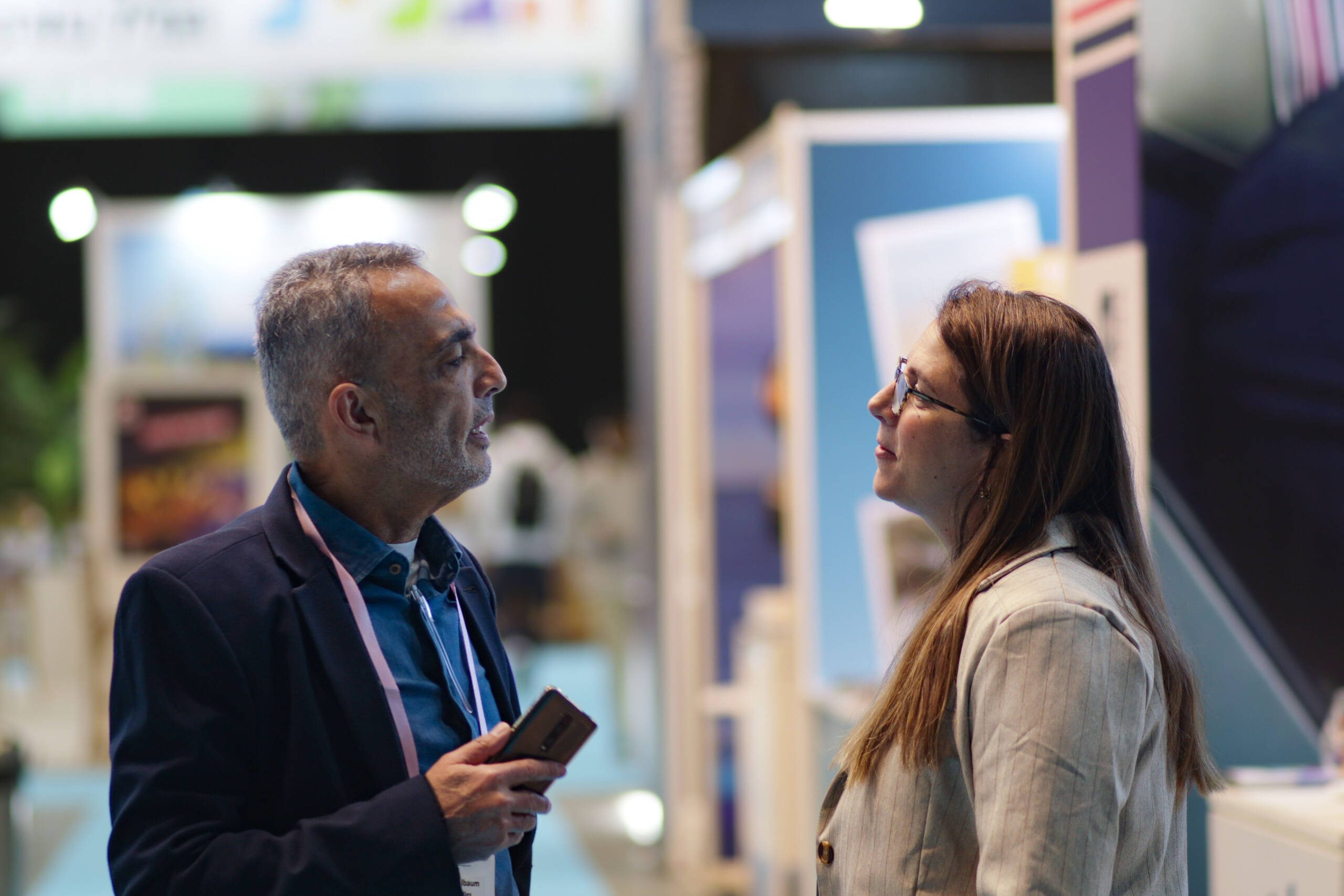
For OSINT practitioners, this kind of moment is not casual networking, it’s fieldwork. Trade shows and professional conventions are dense, temporary ecosystems where open-source intelligence gathers itself almost voluntarily. People talk more freely than they would online, clarify things they would never write down, and hint at priorities, problems, and future moves without realizing they are doing so. A throwaway comment about budget cycles, a casual complaint about regulation, a vague reference to a pilot project that “might go live later this year” can be more revealing than a dozen press releases. On the show floor, context is everywhere: who is talking to whom, which booths attract real interest, which demos are ignored despite marketing spend, which startups have senior people present and which send only sales staff.
Networking for OSINT purposes isn’t about extracting secrets, it’s about pattern recognition in human form. You listen more than you speak, not because you’re passive, but because every response contains metadata. Tone matters. Hesitation matters. Confidence that feels rehearsed is different from confidence that comes from momentum. Even the way someone frames their own role can signal internal politics or organizational stress. The physical environment amplifies this; standing under a massive logo while admitting a feature isn’t ready yet tells you something very different than the same sentence on a website. These conversations, fleeting as they are, help triangulate reality against official narratives.
What makes the show floor especially valuable for OSINT gathering is its semi-public nature. Everyone assumes they’re speaking on the record, but not being recorded. That illusion lowers defenses just enough. People validate rumors unintentionally, correct misconceptions without being asked, or reveal what they consider obvious truths within their sector. You’re not building a contact list as much as you’re building a living map: who influences decisions, who follows, who is overstretched, who is quietly confident. Later, back at a desk, these impressions connect with filings, posts, announcements, and data points already collected. The intelligence doesn’t come from the handshake itself, but from how that handshake reframes everything you thought you knew before you walked onto the floor.
Leave a Reply