• Skip to main content
  • Skip to secondary menu
  • Skip to footer

OSINT.org

Intelligence Matters

  • Sponsored Post
  • About
    • GDPR
  • Contact

The Green Boxes That Could Tip a Global Power Balance

December 3, 2025 By admin Leave a Comment

Standing above the port scene in the image, you catch a moment that feels deceptively ordinary: a bright-green Italia-branded container ship edged neatly between towering cranes, its decks stacked with rows of Evergreen containers in those familiar, almost friendly shades of mint and forest green. The water is calm, the workflow steady, and below the cranes a vast grid of newly imported cars glints under the sun like some carefully arranged mosaic. Everything about the scene whispers routine, the kind of day that usually slips by without anyone giving it a second thought. And yet—well, sometimes the quietest details are exactly the ones worth paying attention to.
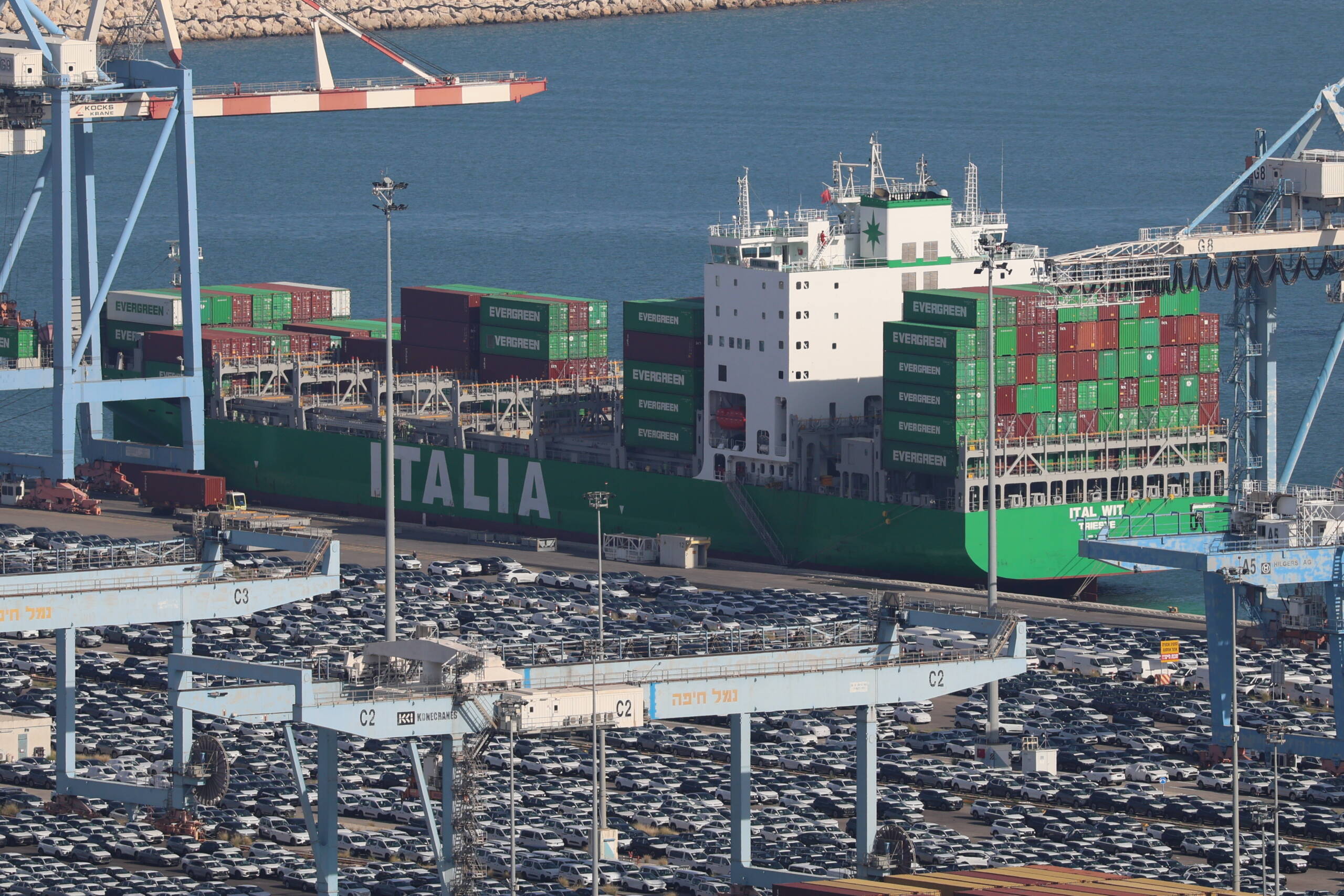
The Green Boxes That Could Tip a Global Power Balance
Shot with Canon 8, Image Credits: pho.tography.org

What this market analysis report report points out, a bit sharply even, is that these very containers—those boxy green units stacked five or six high on the ship’s deck—may be hiding a strategic vulnerability almost everyone overlooked. When you zoom in mentally on the image, you start noticing the repetition: Evergreen, Evergreen, Evergreen. The branding runs like wallpaper across the stacks, and the sheer volume of them hints at an industry where dominance is more than just market share; it’s infrastructure dependency. These containers, after all, aren’t just metal boxes. They’re the physical skeleton of global trade. Every supply chain—cars, clothes, semiconductors, grain—relies on them moving smoothly across oceans, ports, and borders.

The unsettling part, as the MarketAnalysis.com piece lays out, is just how concentrated the manufacturing of these boxes has become. China produces, depending on the year, roughly 90% of the world’s shipping containers. It’s almost absurd when you think about it: one country effectively manufactures the vessels that everything else must sit inside. Those green stacks in the photo feel suddenly less neutral and more like a quiet symbol of strategic leverage hiding in plain sight. If you squint at the ship’s hull against the backdrop of all those parked cars waiting for distribution, the whole port turns into a living diagram of global interdependence—smooth on the surface, fragile underneath.

A plausible OSINT angle here is that shipping containers are the kind of infrastructure that no one thought could be weaponized—until suddenly it becomes obvious how they might. Restricting container supply, raising prices, slowing outbound production, or selectively prioritizing “friendly” markets could all throttle global logistics without firing a single shot. The picture gives this idea a strangely cinematic quality: cranes frozen mid-swing, stacks of imports quietly accumulating on the ground, and above it all, the Evergreen containers perched like strategic assets waiting to be moved—or withheld. It’s not hard to imagine how quickly a disruption here would ripple out. Cars don’t roll out of this port without a container having brought in their components. Shelves don’t stay stocked. Neither do factories stay running.

And yes, maybe it’s easy to read too much into a single snapshot, but part of the value of OSINT is precisely in these mundane visual cues that hint at systemic dependencies. When you look at the image again with this lens, those uniform green blocks become a reminder that the next trade war may not revolve around headline technologies like chips or AI models—but around who controls the boring, stackable, steel rectangles that keep global commerce alive. The quiet stuff, in other words, may turn out to be the decisive battleground.

If this analysis feels a bit speculative, that’s almost the point. The vulnerabilities in global trade rarely announce themselves with drama. They sit calmly at the dock, painted in a pleasant shade of green, waiting for someone to notice.

Filed Under: News

Reader Interactions

Leave a Reply Cancel reply

Your email address will not be published. Required fields are marked *

Footer

Recent Posts

  • BAE Systems OneArc Partners with Skyline Software to Close the Drone-to-Simulation Gap
  • Europe’s Competitiveness Warning From Merz
  • Trump’s Iran Ultimatum: The Logic Behind the Threat
  • ICC War Crimes Complaint Against Spanish PM Sánchez
  • Textron Aviation Defense Wins $150M Follow-On Contract to Sustain T-6 Texan II Fleet
  • Beijing Stages a Reunion, on Its Own Terms
  • Russia’s Security Operations in Africa — Brief Overview
  • Rubio Criticizes Saudi Crown Prince Over Ukraine Defense Deal Without U.S. Approval
  • Five Eyes, Fractured: When Allies Start Acting Like Strangers
  • Chinese Firms Are Selling U.S. Military Positions in the Middle East — Washington Needs to Treat It as Hostile Support

Media Partners

  • Analysis.org
  • Opinion.org
  • Policymaker.net
Apple Delivers a Power Quarter as Growth Reaccelerates Across the Board
PayPal’s Reset Moment Feels Less Like a Shuffle and More Like a Bet on Focus
Reading the PEG Ratio Across Nvidia, Broadcom, and AMD
Nvidia’s $5 Trillion Is Earned, Not Borrowed
Taiwan Overtakes UK as World’s 7th-Largest Stock Market
Intel Q1 2026: Recovery Signals Strengthen, but the Turnaround Is Still Unfinished
Yuan Gains Ground, But the Dollar Still Dominates
MongoDB Expands Irish Operations with €74 Million Investment in AI and Engineering Growth
ServiceNow Q1 2026: The AI Control Tower Thesis Is Holding
Adobe’s $25 Billion Buyback Is a Bet on Itself
The UAE’s OPEC Exit Is a Middle East Realignment, Not an Oil Story
Hormuz Is a Message to Beijing and Moscow
Ammunition Drain: How the Iran Campaign May Be Weakening Taiwan’s Deterrence
Woe to the Vanquished: Iran Still Does Not Get It
U.S. Treasury Sanctions 20 Companies and 19 Vessels in Iran-Related Action, Targeting Chinese Refinery
Iran Will Sign Anything — And That’s Exactly the Problem
The Meme War America Didn’t See Coming
Rama Dawaji: A Late Apology and the Question of Timing
Ada Shelby on Zohran Mamdani’s Grocery Stores
Hochul’s Second Home Tax Is a Press Release, Not a Policy
The Gulf Realignment Washington Missed
Seven Million and Counting: Britain's Managed Demographic Replacement
UK Taxpayers Are Funding £4 Billion a Year in Student Loans for Foreign Nationals
The Strait of Hormuz and the Limits of Chokepoint Leverage
Sheikh Khaled Goes to Beijing: A Resilience Play Against Iranian Revival
After the Franchises: The Technocratic Turn
The Franchise Model of Neo-Autocracy
The Left Franchise and Its Losing Causes
The Merz Standard: Europe's Preferable Leader Type
Christianity, Secularism, and the Soul of Europe

Media Partners

  • Market Analysis
  • Market Research Media
  • Cybersecurity Market
The Bill Comes Due
The Software-Defined Camera Won. The Open OS Did Not.
Cars Are Computers Now, and Most Carmakers Aren’t
Gartner: Global IT Spending to Hit $6.31 Trillion in 2026, Driven by AI Infrastructure
The SDK Generator Benchmarks: Infrastructure vs. Convenience
Infographic: We Are Likely in the Early Stages of Another Productivity Boom
Infographic: Establishing the National Multimodal Freight Network
Global WiFi Market: Size, Segmentation, Trends, and Forecast to 2030
Synera’s $40M Series B: What the Press Release Isn’t Saying
Amazon’s Globalstar Acquisition Is a Spectrum War Dressed as a Satellite Deal
China’s U.S. Treasury Holdings: The Great Repositioning (2021–2025)
Infographic: Why the 2025 CIPA Data Proves the APS-C Renaissance is Real
How WiFi Changed Media
Canva Acquires Simtheory and Ortto to Build End-to-End Work Platform
Netflix Price Hikes, The Economics of Dominance in a Saturated Streaming Market
America’s Brands Keep Winning Even as America Itself Slips
Kioxia’s Storage Gambit: Flash Steps Into the AI Memory Hierarchy
Mamdani Strangling New York
The Rise of Faceless Creators: Picsart Launches Persona and Storyline for AI Character-Driven Content
Apple TV Arrives on The Roku Channel, Expanding the Streaming Platform Wars
General Analysis Raises $10 Million to Secure the Fast-Rising World of AI Agents
Black Hat Asia 2026, Singapore: Cybersecurity Event Highlights AI Threats and Data Sovereignty
Aptori Expands Runtime-Driven Validation Platform for the AI Coding Era
Rilian Raises $17.5 Million to Bring Agentic AI Into Cybersecurity and Sovereign Defense
ServiceNow Completes $7.75 Billion Armis Acquisition, Expands AI Security Ambitions
Enterprise WiFi Security: Where Convenience Stops and Control Begins
International Cybersecurity Challenge 2026, May 18–21, Gold Coast, Australia
Bitdefender Expands GravityZone With Extended Email Security to Close the Inbox Gap
The Security Blind Spot Inside the Arduino-Powered IoT Boom
Altum Strategy Group: Cybersecurity in 2026 Is No Longer a Technology Problem

Copyright © 2026 OSINT.org

Media Partners: k4i · OPINT · Hormuz · Taiwan Strait